Qiko Qiko
Kids should know how to make things, fix things, grow things and cook things.
Qiko gives children real tools and real challenges so they can learn practical skills by doing them.
Ages 9–13 · No payment today
What a child learns
Four things worth being able to do.
Qiko is organised around capability, not subjects. We started with the one where a child can be trusted with something real and find out today whether it worked.
Make & Fix
Here now
Tools, measurement, building and repair. Where a child stops handing you the broken thing.
grow things
Grow
Not yet
Soil, water, light, patience, and something you can eat at the end.
cook things
Cook
Not yet
Heat, knives, timing, and a meal somebody else is grateful for.
Grow and Cook have no date and nothing to join. They are what we believe a child should learn — not a product you can want yet.
The range
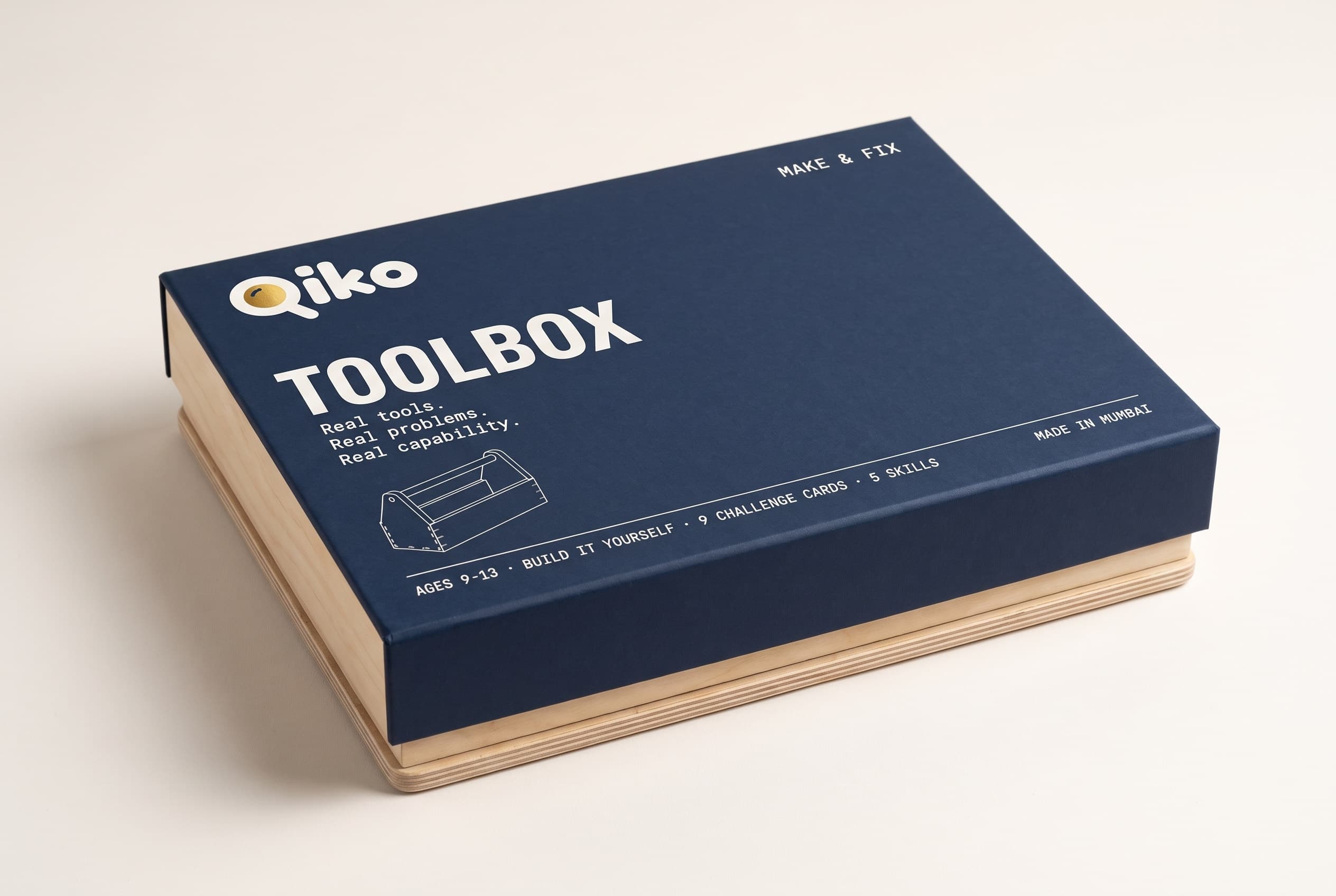
Start with the Toolbox.
One mission today. The tools are bought once
and every mission after this uses them.
Make & Fix
Real tools.
Real problems.
Real capability.
- Ages
- 9–13
- Sessions
- Two
Ages 9–13 · Nothing ships yet · Nothing to pay today
What’s inside
Twelve things. Every one of them real.
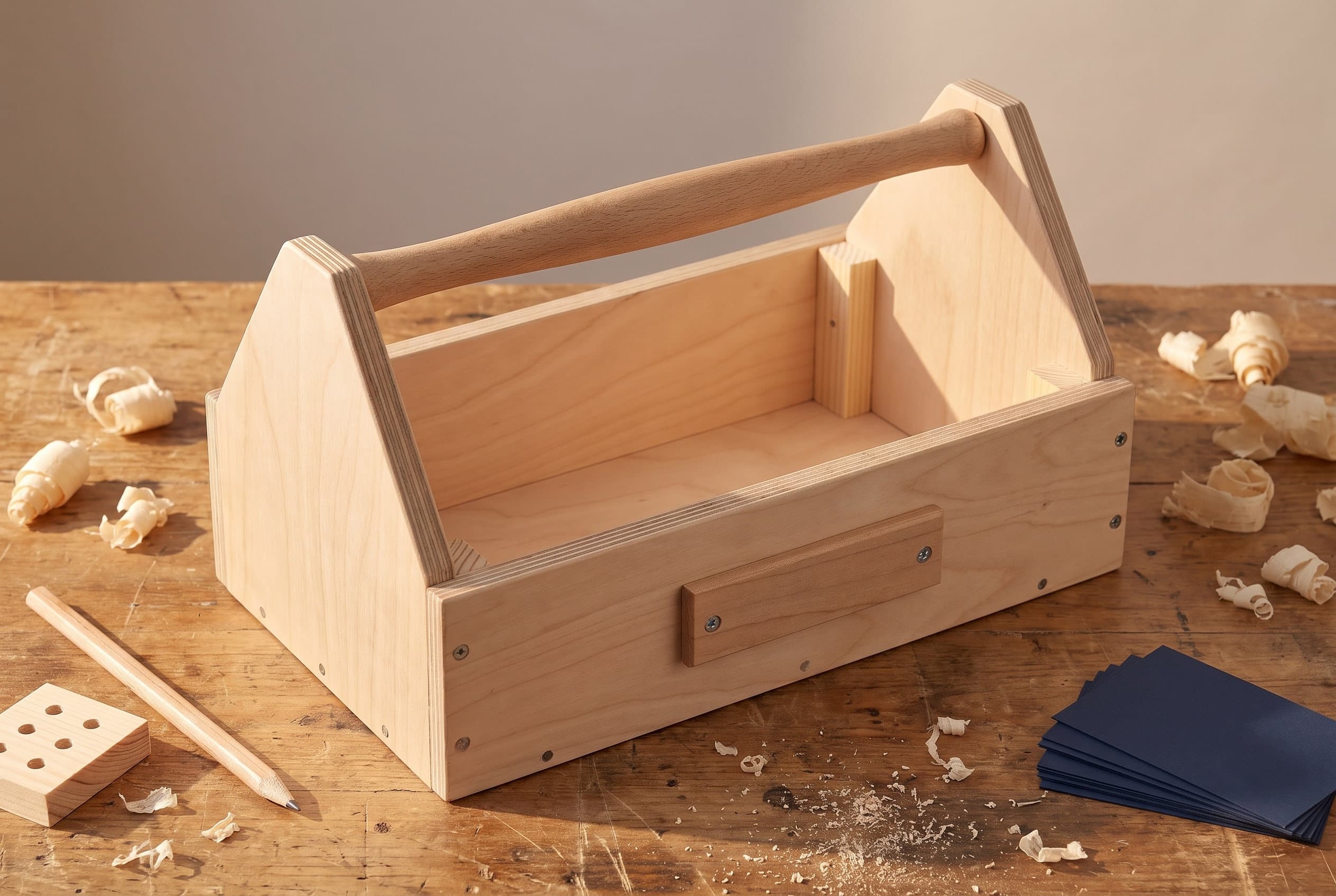
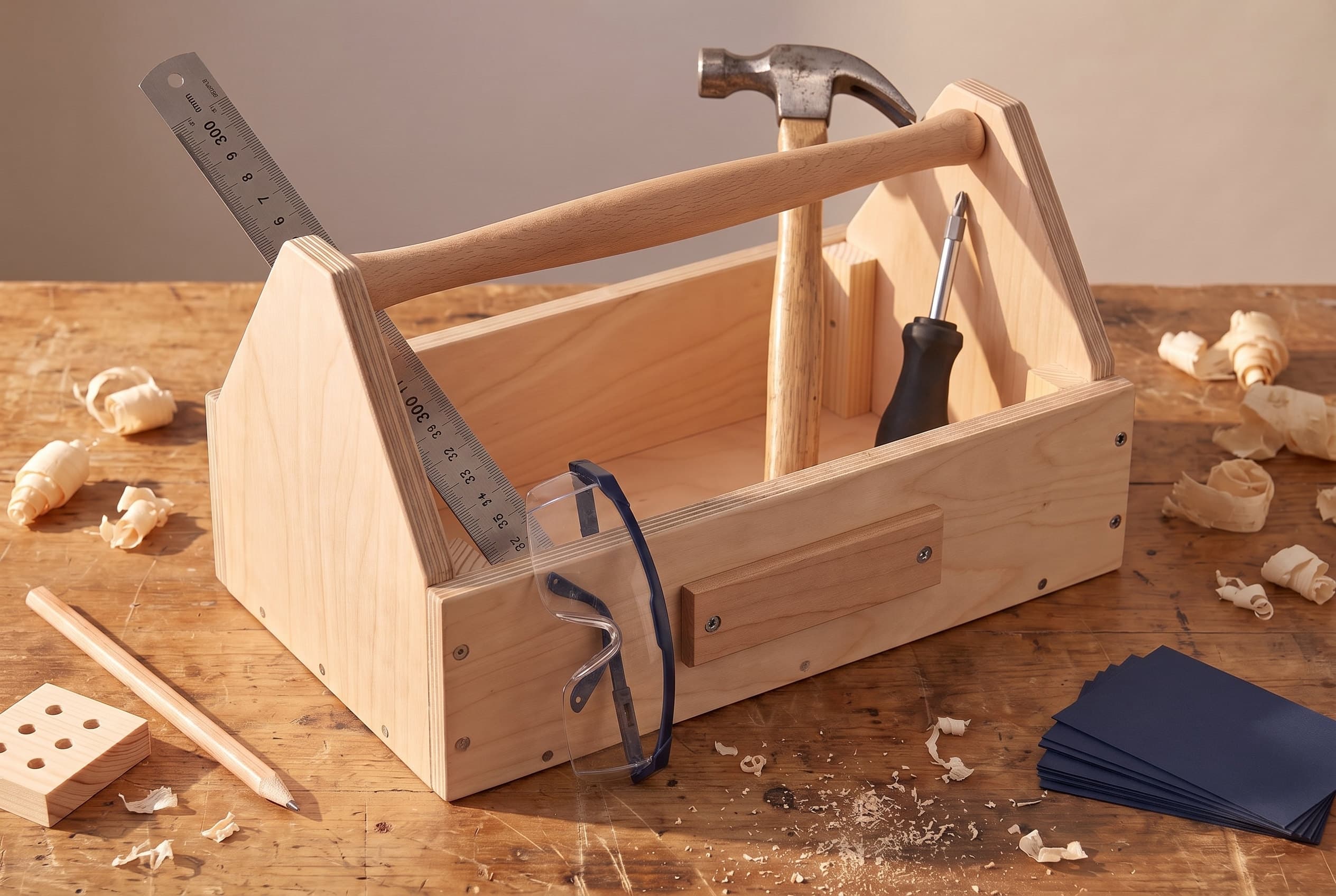
Six make the toolbox. Six are the tools — and those are bought once, because every mission after this one uses the same set.
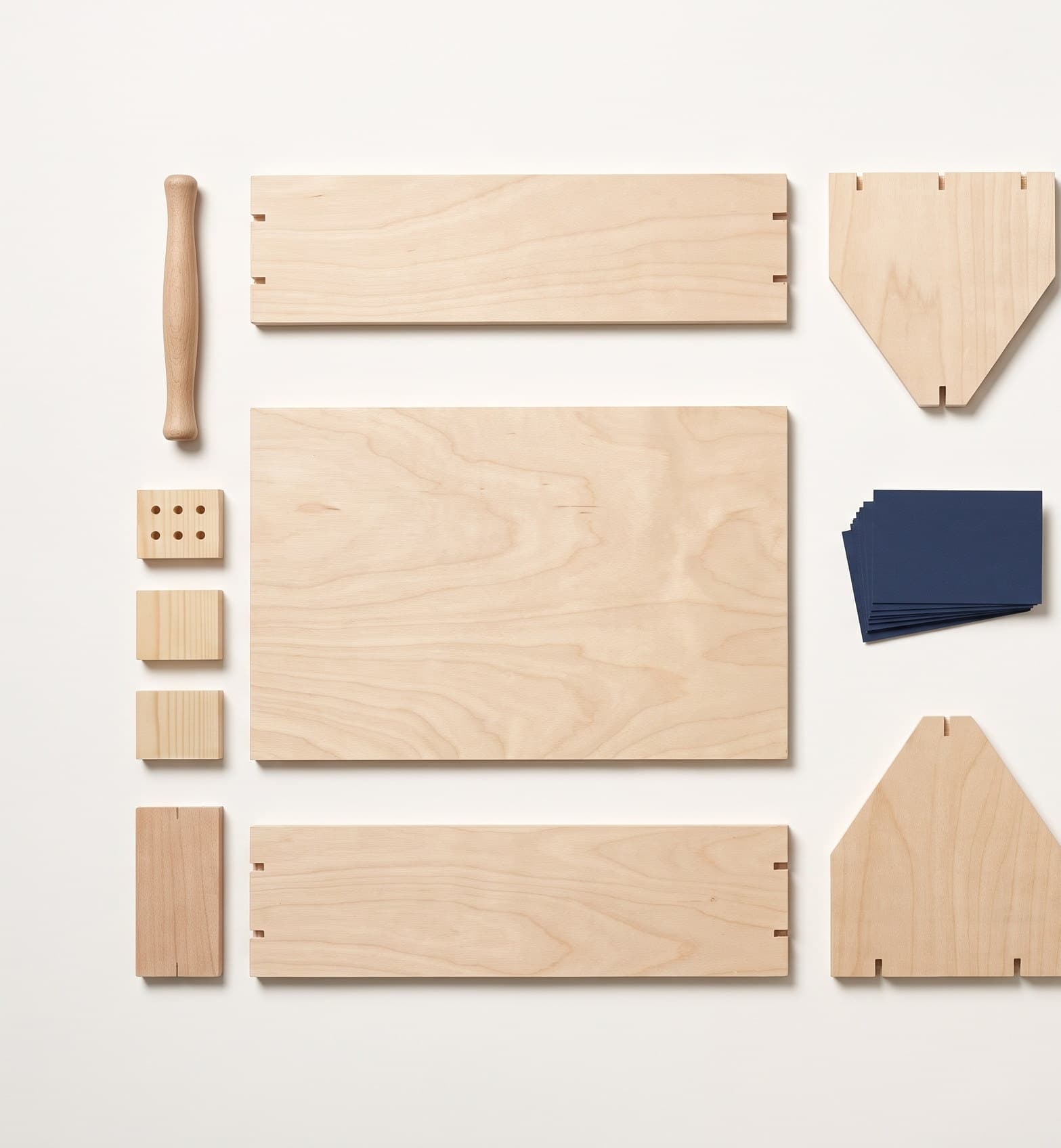
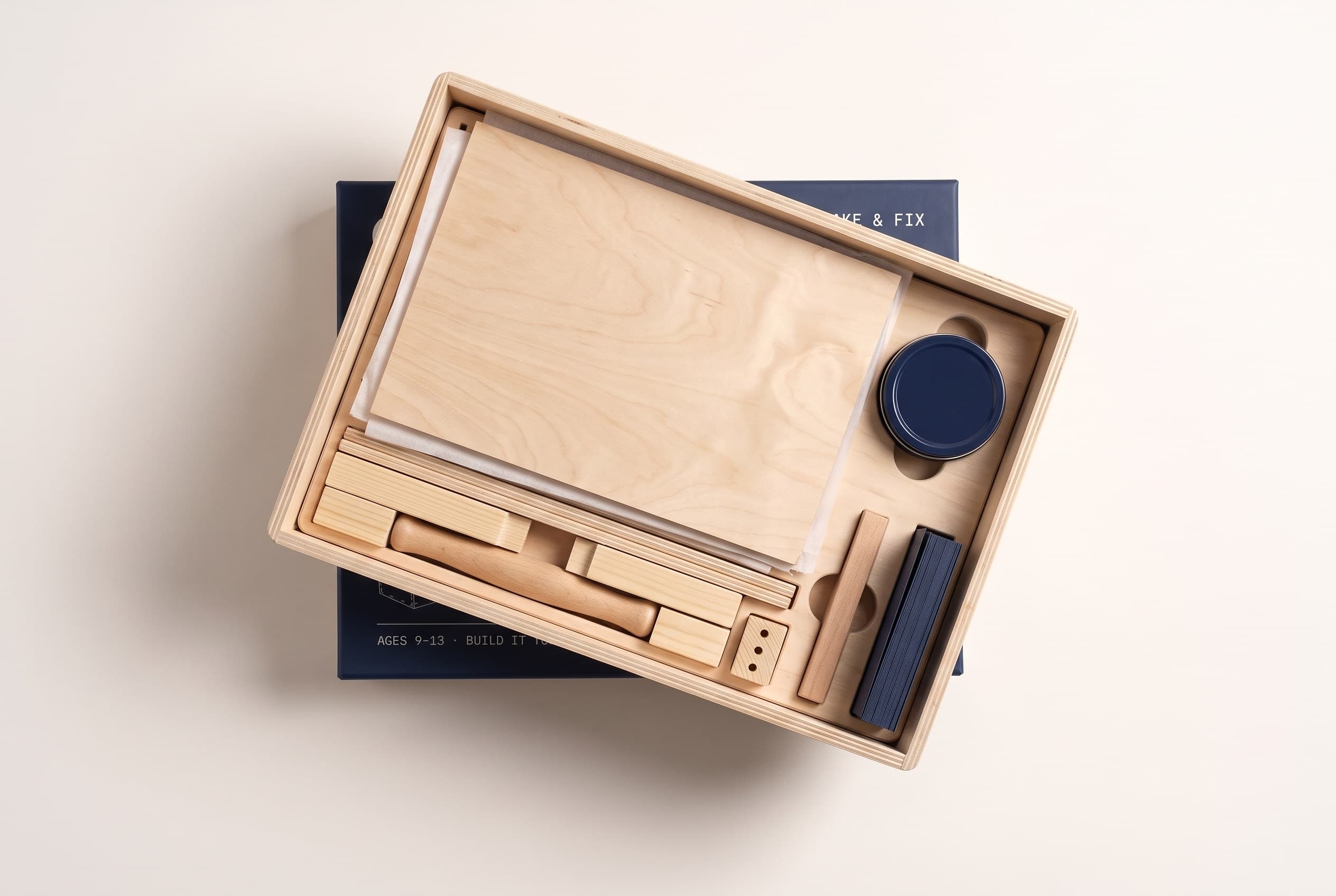
The toolbox, in pieces
Birch ply, pre-cut — base, two sides, two ends
Cut, not kitted: there is no click-together plastic here. The panels meet where the child puts them, which is why one of them can be wrong.
Pine corner cleats
Softwood, 20 × 20mm
The box is screwed to these and the base is nailed into them. Ply edges split under a nail; pine takes one — so both tools are here because the construction needs them, not because a curriculum wanted five verbs.
A dowel handle
Hardwood, turned
The carry test acts through this. It is the part that tells them whether they built it properly.
A warm-up offcut
Same ply, drilled and scored
Fifteen minutes on wood that doesn't matter, before touching wood that does. What a carpenter does, and what most kits skip.
A blank nameplate
Hardwood, two pilot holes
Measured, marked, sanded and screwed on by them. It is the moment the box stops being ours.
Nine challenge cards
Plus one card for you
Each gives a problem and never a procedure. Three of them contain a fault the card does not mention.
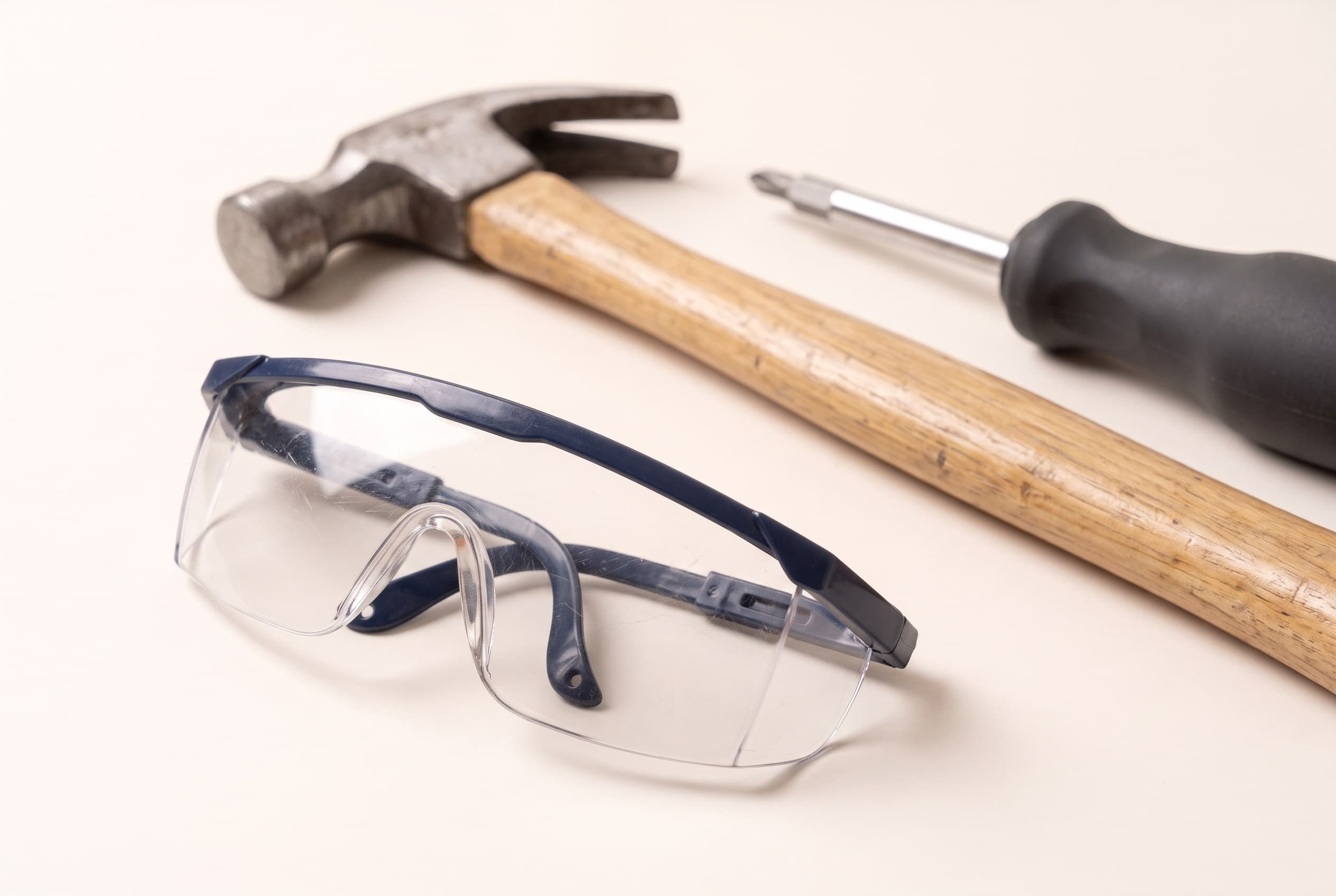
A real hammer
225g, wooden handle, child-sized
Not a toy one. A 100g hammer bounces, takes thirty strikes and teaches the opposite lesson — the weight is what does the work.
A real screwdriver
Reversible bit — cross one end, flat the other
One handle, two tips, so choosing the right one is a real decision rather than a rhetorical one.
Steel ruler
300mm, millimetre marks
With a findable zero. Half the measuring mistakes a child makes come from a ruler whose zero isn't at the end.
Safety glasses
Child-sized, impact-rated
Child-sized, because adult glasses slide down and get taken off. Also the ritual that tells everyone this is real.
Sanding block, two grits
Coarse and fine
A block, not loose paper. Loose paper teaches nothing about pressure, and it is why most sanding ends up uneven.
Screws, nails and a lidded tin
20 of each
Enough to get it wrong several times. The tin is where they live afterwards, which is a habit worth building early.
And deliberately not in it — no drill, no saw, no electronics, no craft consumables, no plastic version of anything. What justifies the price is what your child can do at the end, not the weight of the box.
Things they can do
Not just something they made.
Something they can now do.
Written the way a child would say it, and beside it the way they’d prove it. We don’t claim a skill we can’t describe them demonstrating.
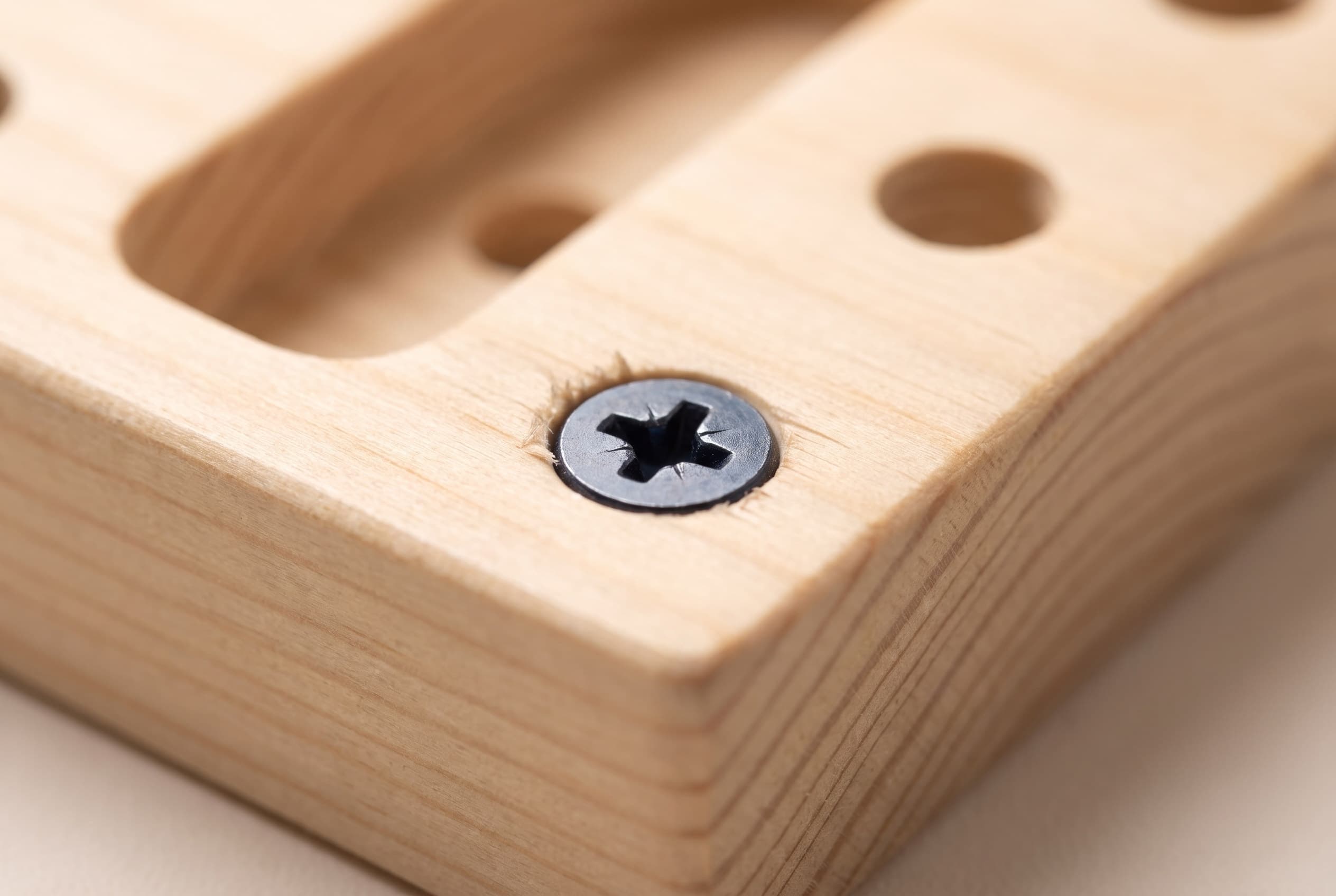
I can set up my workspace and work safely.
ProofGlasses on before the first strike. Board stable. Free hand behind the strike line. Tools back in the tray between jobs.
I can measure and mark exactly where I want.
ProofMarks a given distance within 2mm, from the right end of the ruler, with a mark thin enough to aim at.
I can drive a screw straight, and I know when to stop.
ProofScrew seated flush — not proud, not sunk past flush. Run a fingernail across it and you shouldn't catch.
I can hammer safely and accurately.
ProofNail driven within about 10° of upright, head flush, no strike outside the target, free hand never in the strike path.
I can find a rough edge and make it smooth.
ProofFinds the rough section by touch with their eyes closed, sands it, and it passes the same eyes-closed test afterwards.
I can find what's wrong, fix it, and check that I fixed it.
ProofGiven a fault nobody has named: notices it, says what's wrong, picks the right tool unprompted, repairs it, and tests the repair without being asked to.
The whole Make & Fix map — including what we haven’t built yet, marked as such.
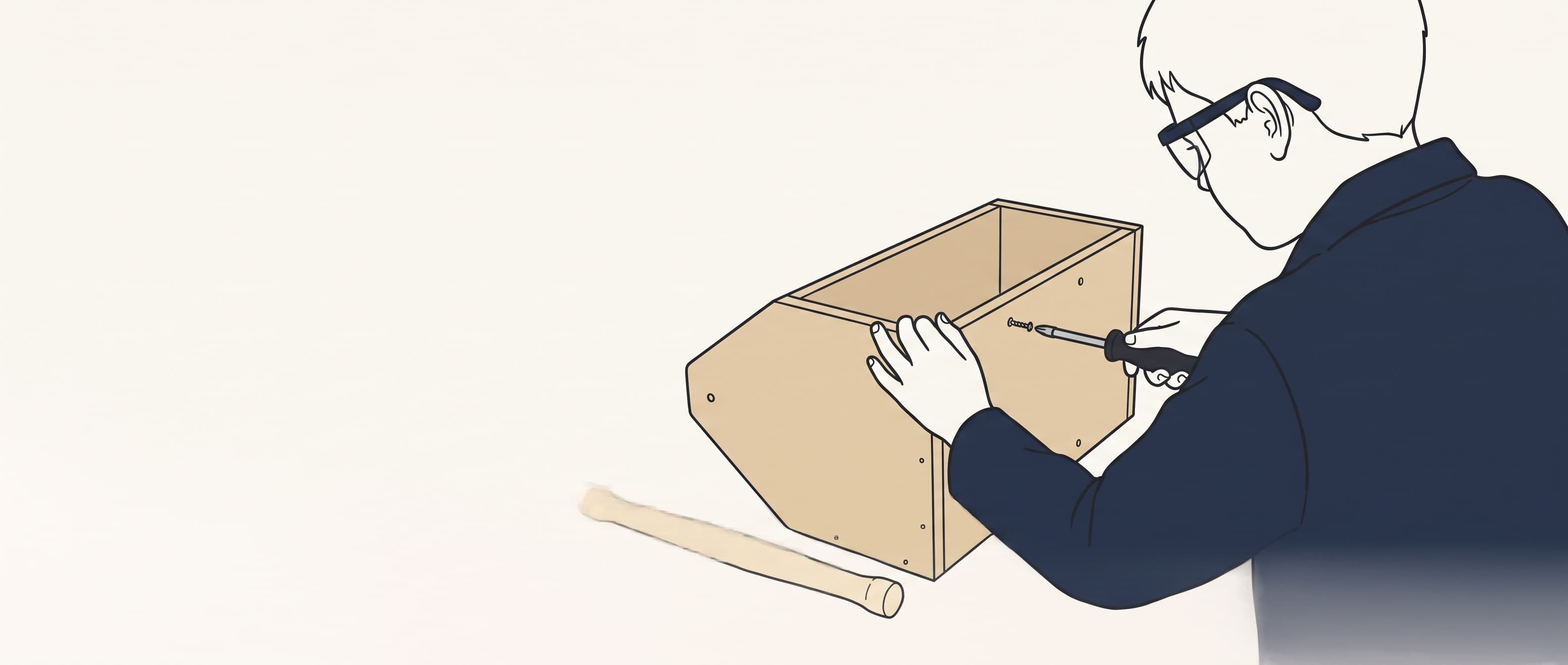
Give them room to figure it out.
How Qiko works
The child does the work.
Every card gives a problem and never a procedure. There is no step one to follow — which is what makes the next six steps theirs.
- A real problem
- They try
- It doesn't work
- They figure it out
- They fix it
- They check it worked
Qiko doesn’t remove every difficulty. It makes the difficulty safe enough for children to solve.
For the grown-up
Your job isn't to teach.
It's to give them room to figure it out. You're in the room the whole time — that part isn't optional — and the box tells you the two moments to step in. Everything in between is theirs, including the parts they get wrong.
- You're in the room. The whole time.
- Within arm's reach, sitting down. This isn't a product that entertains your child while you do something else, and we'd rather say so now.
- You step in exactly twice.
- Once to check the glasses are on. Once if something's genuinely unsafe — a hand in the strike path, a tool pointed at a face. Everything else, you sit on your hands.
- Small tools, real ones.
- A 225g hammer, a child-sized screwdriver, impact-rated glasses. Nothing that cuts, nothing with a motor, nothing that plugs in.
- Designed so mistakes are cheap.
- Short nails, a card holder that keeps fingers out of the strike path, and a claw so anything that goes in can come back out. Getting it wrong should cost a second attempt, nothing more.
- Not for under-sevens.
- And the screws and nails are a choking hazard, so they live in a lidded tin away from smaller siblings.
The full safety position — hazards named, and what stays your call.
Qiko
Toolbox
- Ages
- 9–13
- Expected price
- ₹699
- With Qiko Tools
- ₹1,399 · saves ₹199
- First pilot
- 6 families
Expected price for the mission on its own. We haven't manufactured any yet, so this is our estimate — you'll know the real number before anyone is asked for anything.
Which one would you want after this?
Optional — it just rides along in the message. Neither exists yet.
Nothing to pay. We'll message you before anything ships.